
As a special education teacher and a behavior analyst, I have spent a lot of time learning about learning. How people (and animals) learn is super interesting to me and has become more so over time.
Before I was a BCBA, my methods of teaching were different than they are now. The science of ABA now informs everything I do — it’s that good!!! Teachers often teach by guiding students to the correct answer, helping the student to problem solve along the way and come to the correct solution “on their own.” This leads to mistakes and errors.
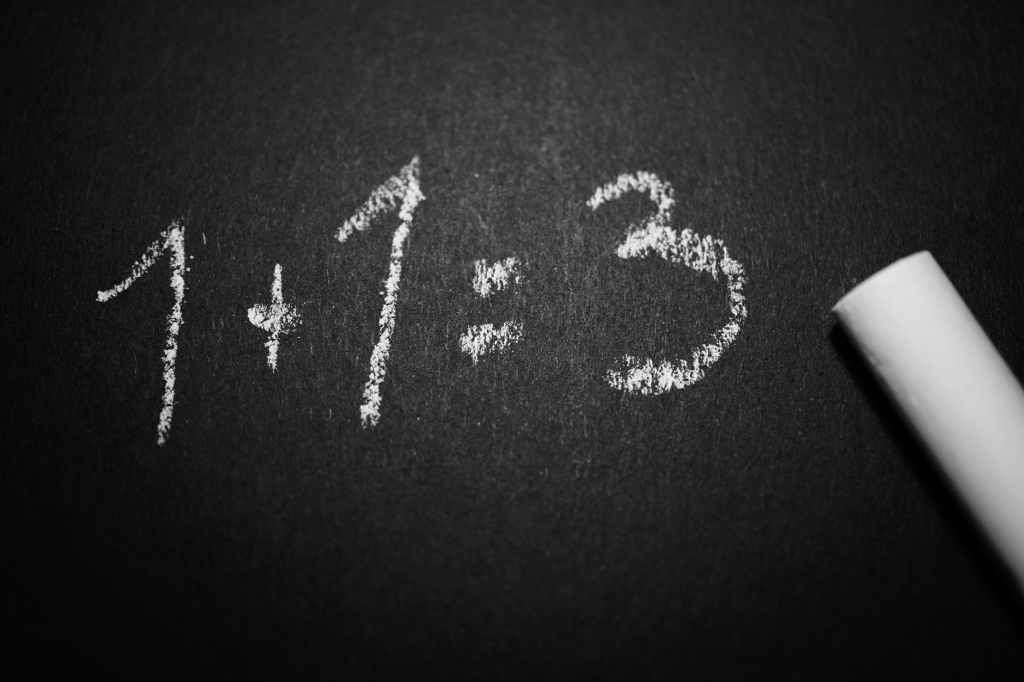
That’s fine, right? Kids learn what works and what doesn’t.
Usually.
Other times, mistakes get engrained (accidentally). For example, think of a time, when you were a kid and you learned something–but you learned it wrong and you kept making the same mistake over and over. Frustrating! For me, it was 8 x 7. I really thought 8 x 7 was 54. I made the mistake, the mistake maybe wasn’t corrected (it was accidentally reinforced in some way), and so I made the mistake again and again. So, for a while, each time I answered that multiplication fact, I said 54. Finally, after many more mistakes, I relearned the correct answer (8 x 7 = 56). But it was so hard to stop that 54 from popping into my head when asked 8 x 7!!
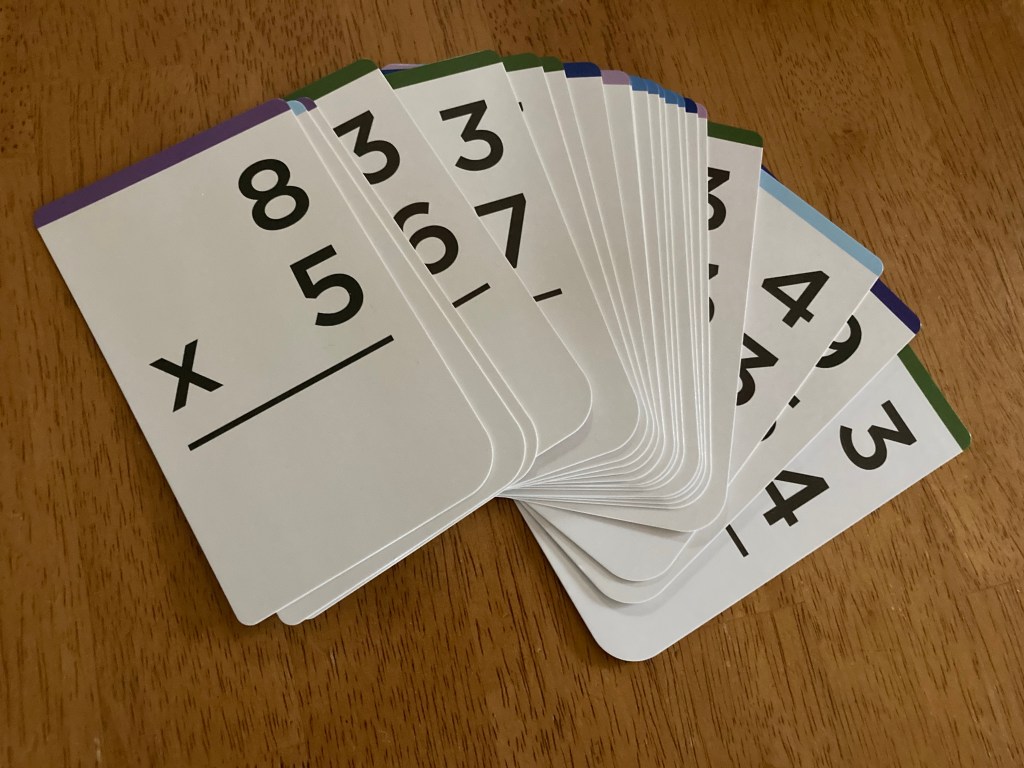
Errorless learning, on the other hand, does not allow errors. When new information is introduced, like a new multiplication fact, a student is told the correct answer, first time. Then, the next time, maybe it’s told again. But on the third time, the teacher would wait a short bit of time (as in maybe 2 seconds, using a time delay) before telling the answer to see if the person is able to come up with it on their own. Key phrase: SHORT bit of time. With errorless learning, a teacher doesn’t wait for a student to make an error — to guess — in the hopes that the student now knows the answer. If the teacher waits 2 seconds and the student hasn’t yet stated the answer, the teacher would then give it and move on.
The other day, I was working with my son on his multiplication facts. He has learned in school how to solve them. He knows the strategies, and can come up with correct answers. Great!!! But he needs time in order to do so. As he is in 4th grade, math is, of course, becoming more advanced and they’re learning beyond just simple multiplication facts. At this point, it would be helpful if he memorized those last few stragglers that he can’t seem to remember (like 8 x 7, ha!).
So, I set up a “program” for him. Because I do that sometimes. I analyzed his baseline data; I found out which facts he knew and didn’t know. I created graphs for him to visually track how much he learns over time (to help motivate him). I showed him the graphs to start. I filled a multiplication chart in yellow for the facts he knew and left the others blank. (Another visual way to track progress). I prioritized where to start, based on which facts he knew already.
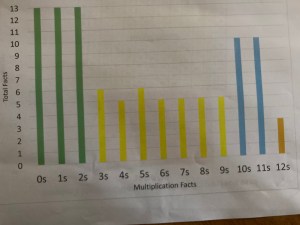
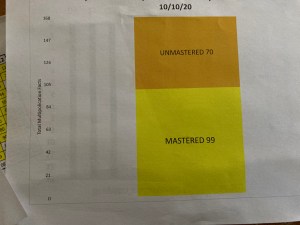
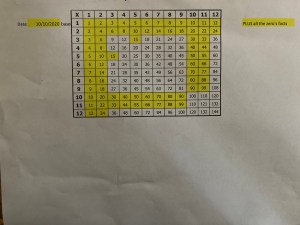
When he and I sat down to work (and he’s super motivated to master the facts!! but that’s a different topic😊), I started trying to teach in an errorless way, just as I would introduce new information when teaching as a BCBA. I began flashing each multiplication fact card, stating the number sentence aloud, and then immediately giving him the answer.
He got angry. He was not happy that I told him the answer.
“I was going to get it! Why’d you tell me?!?!?!” he said.
His response told me that he has learned his job is to guess (or work it out in his mind) until he comes to the correct answer, and that process will lead him to his expected reinforcement (praise for answering). To him, I had taken away his opportunity for praise and the happy feeling of getting it correct, because I told him the answer without letting him try. Meanwhile, in the time he spent guessing, he could have gotten in about 5 errorless trials, which would build up and go into his memory for the next time (he’d be learning rather than guessing).
I explained my thoughts to him. I told him, it’s okay if I tell you the answer. I told him, watch and see, when we do this again and again you’re going to know the answer next time, without even thinking. He was skeptical but went along with it. We still need to practice more, but I am confident he will believe me after seeing his own progress soon!
This whole experience made me think, though. If kids were taught in this way more often (it’s not for everything— such as learning what multiplication is and what it really means to multiply—but certain things (like memorization of basic facts) would lend themselves well to errorless teaching) students may end up a lot less frustrated with learning. And again, don’t get me wrong, there’s more that goes into it than what I’ve just said… but I would be happy to answer any questions you may have about it. Let’s discuss!
When I was studying for the behavior analyst board exam, I went the errorless learning route as much as possible. I passed, first time…🤷♀️ I think it helped. (Also, there’s a wee bit o’ research that can tell ya more!)
Long story short, I’m telling you, when things need to be memorized use the hints you have and the resources around you.
Make sure you don’t guess!
Try to avoid making errors…
If you are at all unsure about something, FIND IT OUT FOR SURE before moving on.
Try it & let me know what you think. Errorless learning/teaching can, at least, be another tool for learning in your toolbelt!!